10 Insense alternatives worth comparing in 2026 (including what the trial costs)
TL;DR: Insense's entry "Trial" is a paid month at $650 that auto-upgrades unless you cancel 48 hours before it ends. After that, Brand is $500/mo billed quarterly or $400/mo billed annually, and Agency is $800/mo quarterly or $640/mo annually. A marketplace fee applies on top: 20% on Trial, 10% on Brand, 7% on Agency, with creator payments budgeted separately. This page ranks 10 alternatives. Leewou is first for teams that need creator research rather than a UGC content pipeline, at $149/mo with no fees on creator spend.
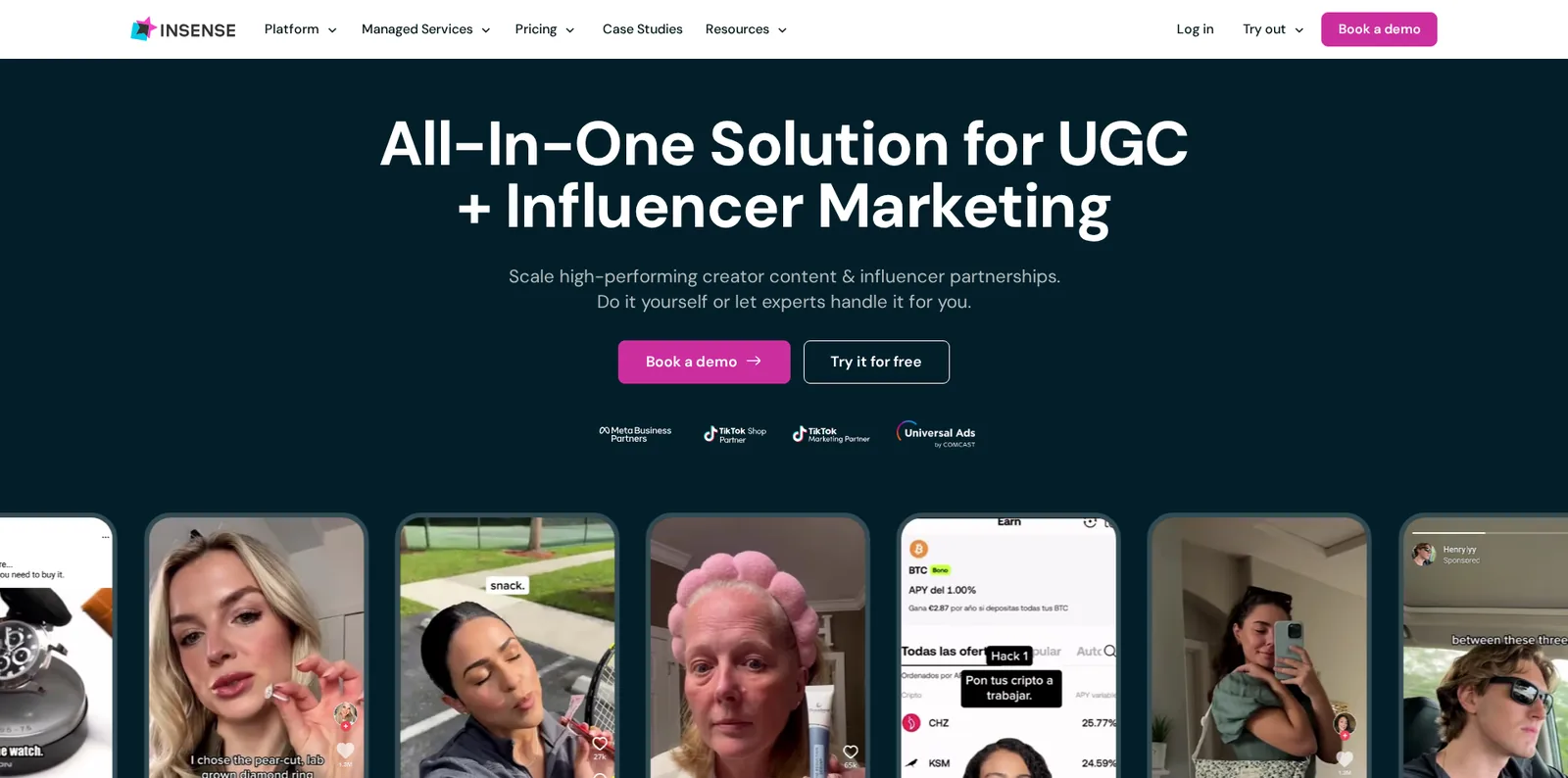
Insense is good at a specific and valuable thing: getting creator content made and pushed into paid social. It is a Meta Business Partner and a TikTok Marketing Partner, and the Partnership Ads integration is a real capability most tools on this list do not have.
What sends people looking elsewhere is the cost structure, which has three parts stacked on top of each other rather than one.
Why people look for an Insense alternative
The trial is not free, it is $650
Insense's entry tier is labelled Trial and costs $650 for one month. It allows up to 10 creators, 1 seat, 1 brand and 1 campaign, carries the highest marketplace fee at 20%, and auto-upgrades to the Brand plan unless you cancel at least 48 hours before it ends.
Charging for a trial is a legitimate choice when a platform is fulfilling real creator work. It is still a $650 decision before you know whether the product suits you, and it is the single biggest difference from every self-serve tool on this page.
The marketplace fee sits on top of the subscription
Insense takes 20% on Trial, 10% on Brand and 7% on Agency, applied to creator payments which are budgeted separately from the subscription.
That means a brand on the $400/mo annual plan spending $10,000 a month on creators pays roughly $1,000 in fees on top, so the true monthly cost is closer to $1,400. The fee falls as you upgrade, which rewards scale, but it always grows with your spend.
Marketplace liquidity gets mixed reports from the creator side
Creators on Insense report uneven campaign flow, which matters to brands because a quiet marketplace is a slower one to staff. One creator described applying to around twenty campaigns in a week with everything left pending:
I recently joined insense to scope out the jobs there, and I have applied to about 20, within the past week, and have had all of them sit in the pending.
exloringtheworld, r/UGCcreators
Another creator was more positive about deal size while flagging slow payment from brands. Take both as creator-side experience rather than a verdict on the brand product, but if you plan to staff campaigns quickly, ask about current response rates in your category.
10 Insense alternatives, and where each one fits
Disclosure: Leewou is ours, hence first. Several entries below are databases rather than UGC marketplaces, which is a different way of working. Nobody paid for placement.
1. Leewou
Best for: teams whose bottleneck is finding and vetting creators, not producing ad content.
| Leewou | Insense | |
|---|---|---|
| First month | Free 14 day trial, no credit card | $650 paid Trial month |
| Ongoing price | $149/mo ($99/mo billed yearly) | $500/mo quarterly or $400/mo annually (Brand) |
| Fee on creator spend | None, payments not handled | 20% Trial, 10% Brand, 7% Agency |
| Creator reach | 430M+ indexed public profiles | Opt-in creator marketplace |
| Seats on entry paid plan | 2 | 1 on Trial, 2 on Brand |
| Audience data | Demographics, engagement, growth, authenticity signals | Creator profiles and campaign performance |
| Paid social integration | None | Meta Partnership Ads and TikTok Marketing Partner |
| Built around | Discovery, analysis, vetting, campaign monitoring | UGC production and creator ads |
These products barely overlap, so the useful question is which half of the job you are buying.
Insense exists to get content made and running as ads. Creator briefs, content licensing, Meta Partnership Ads, TikTok Spark-style whitelisting. If that is your workflow, Leewou does none of it and you should not buy Leewou for it.
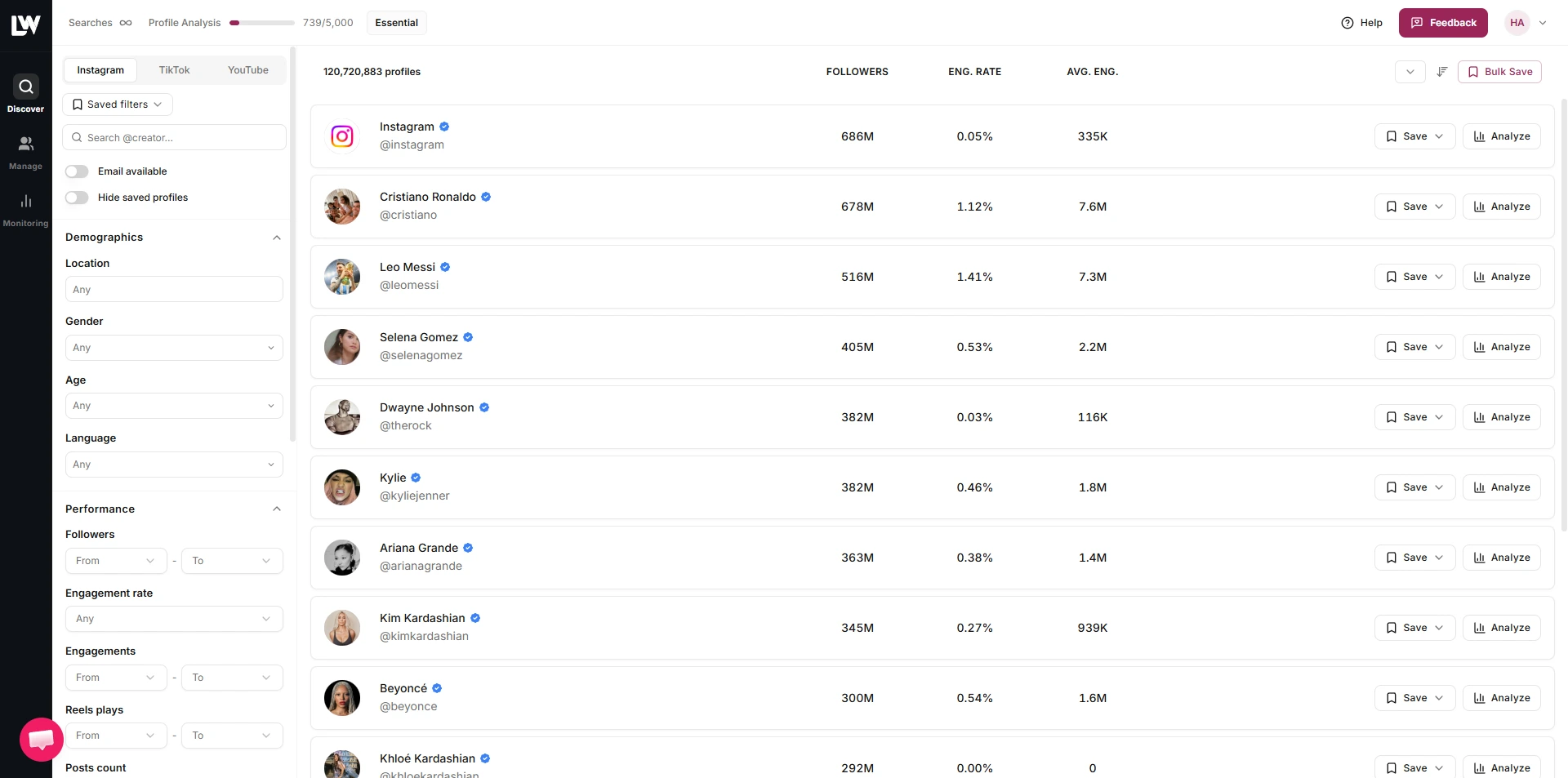
Leewou exists to answer a different question: out of every creator posting on Instagram, TikTok and YouTube, which ones actually reach the people you sell to? That's 430M+ indexed profiles from around 950 followers, with audience demographics, engagement history, growth trends and authenticity signals, plus shared lists and post-level campaign monitoring.
On cost, the shapes differ more than the numbers. Leewou's first month is free and every month after is flat. Insense's first month is $650 and every month after carries a percentage of your creator spend. At $10,000 monthly spend on the Brand plan, that is roughly $1,400 against $149, though you are buying content production for the difference.
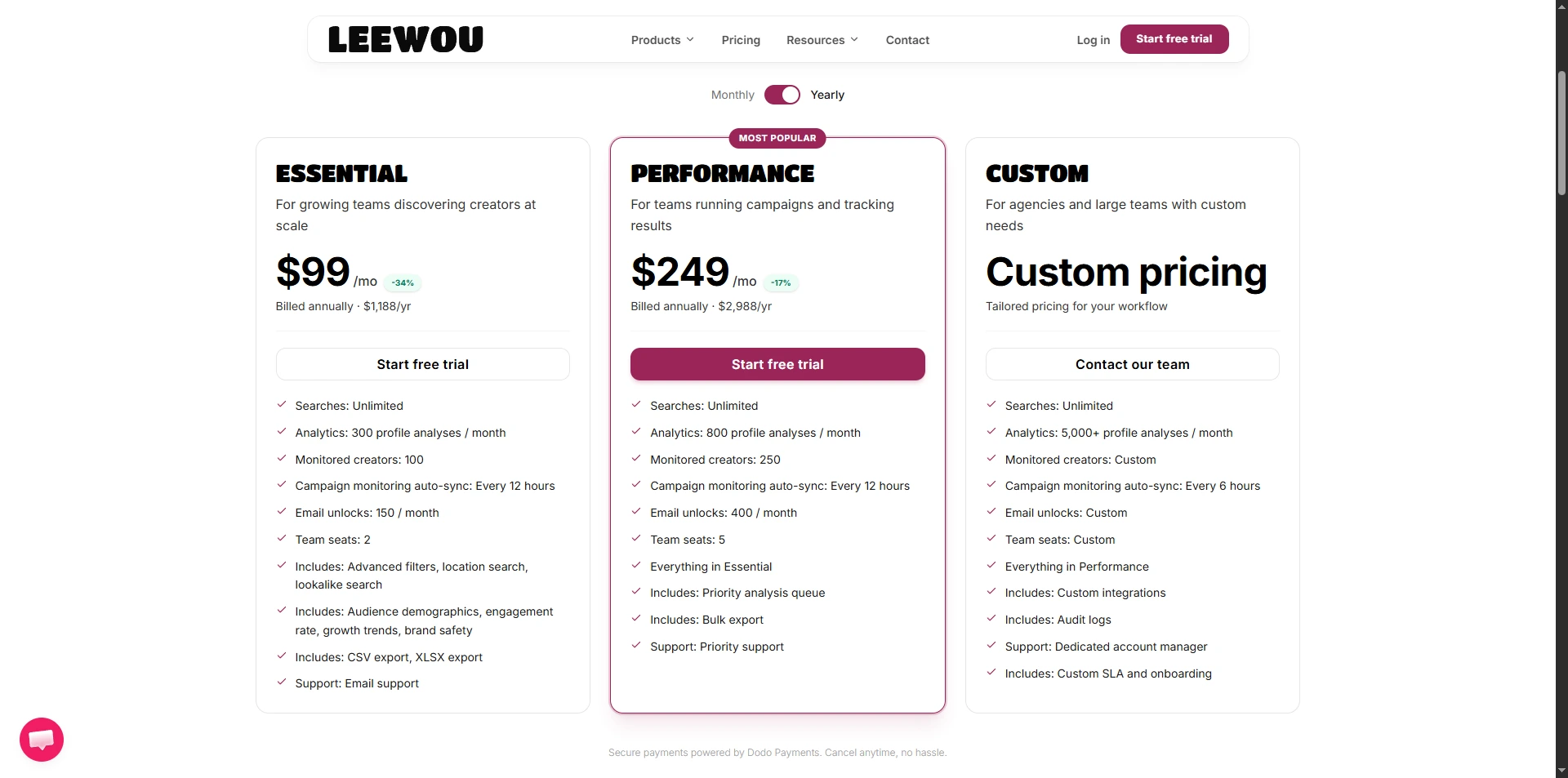
Pricing: Essential $149/mo ($99/mo billed yearly) with 300 analyses and 2 seats, Performance $299/mo ($249/mo billed yearly) with 800 analyses and 5 seats, Enterprise from $6,999/yr. 14 day free trial, no credit card, cancel anytime.
Find out if it fits before spending $650
430M+ creators, unlimited search, 14 days free. No credit card, no auto-upgrade.
2. Collabstr
Best for: brands that want UGC booked quickly without a monthly commitment.
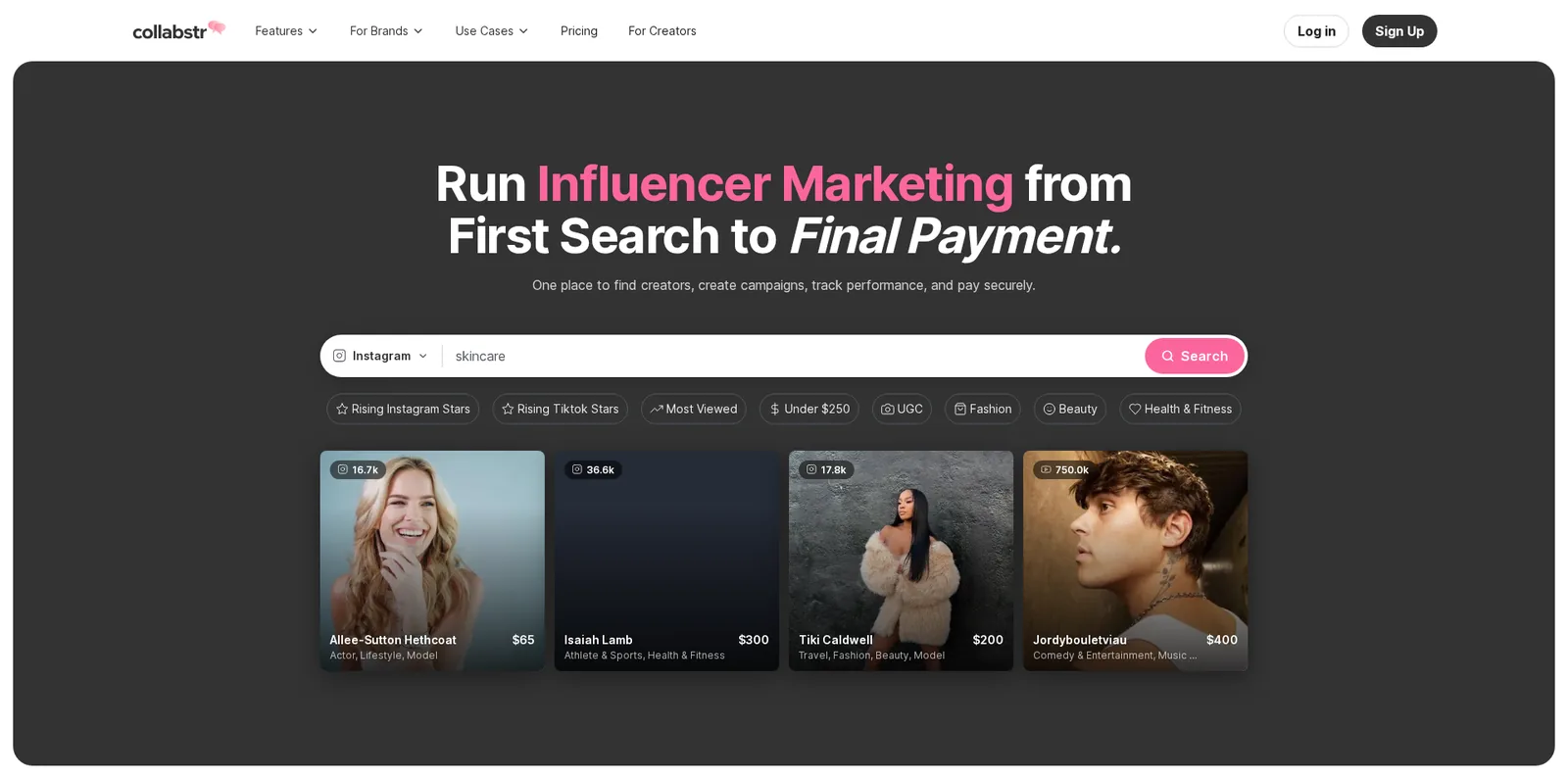
Collabstr is the closest model to Insense and considerably cheaper to start. It has a free entry tier, publishes a 5% hiring fee, and lists around 1.1M creators with prices on their profiles. Weaker on paid social integration, much lighter on commitment.
3. Modash
Best for: Shopify brands that want discovery, payments and affiliate in one published-price tool.
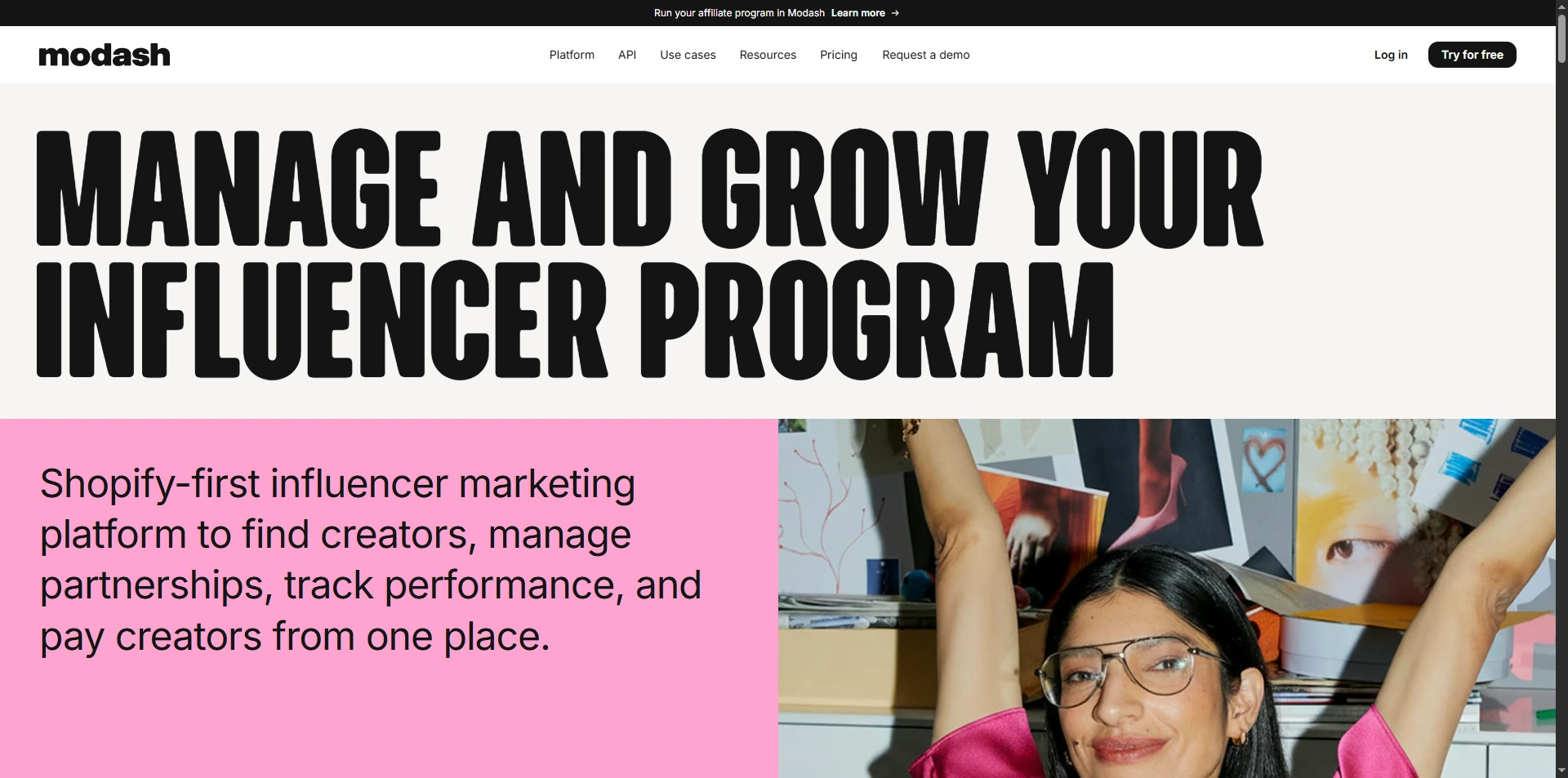
Modash publishes Essentials at $299/mo with 2 seats, 300 opened profiles and 150 email unlocks, against a 380M+ index. Cheaper than Insense Brand with no percentage fee on creator spend, though it does not produce or license ad content.
4. GRIN
Best for: ecommerce teams that want to test a full platform for nothing first.
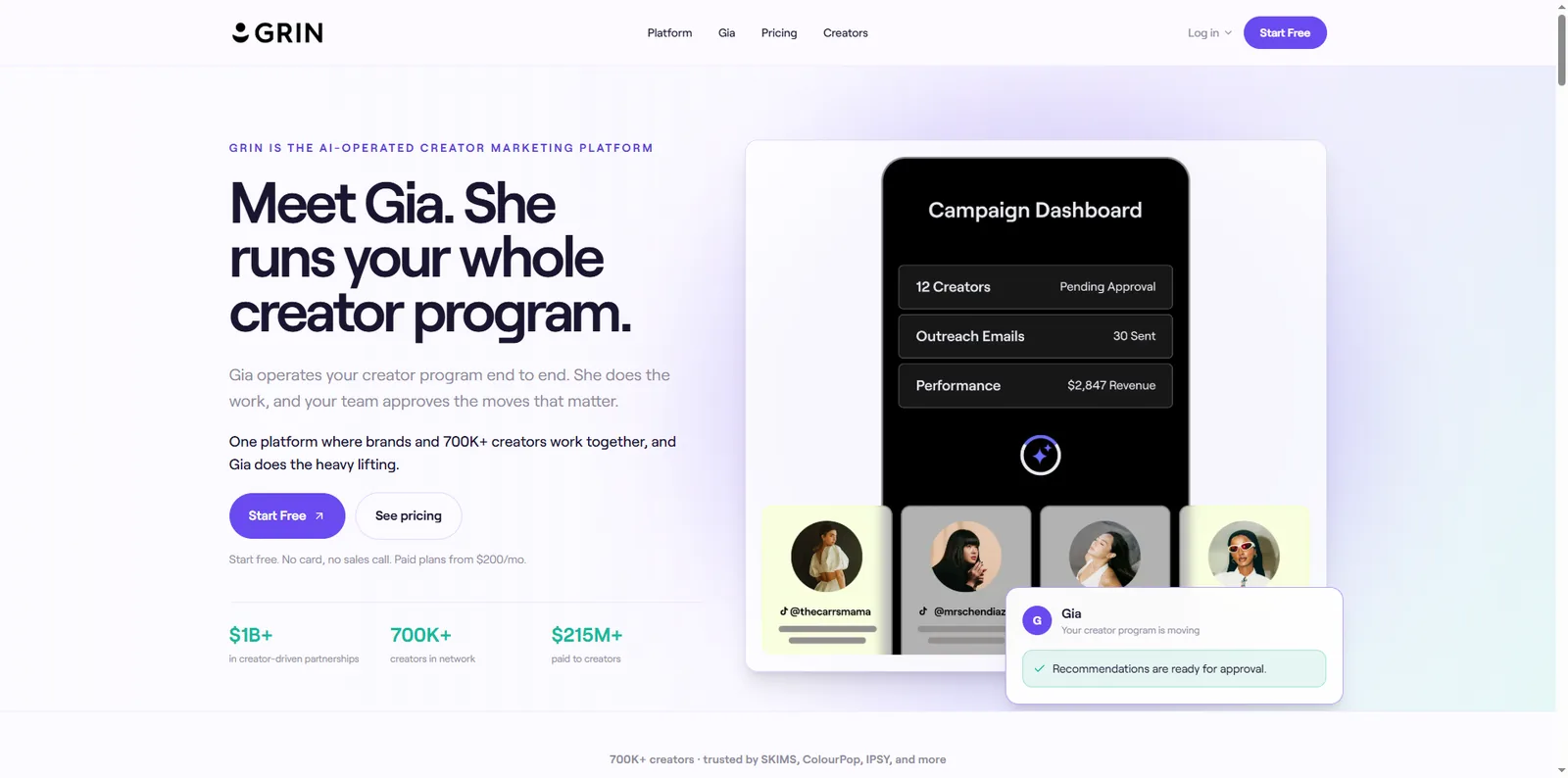
GRIN publishes five self-serve plans from $0 to $1,500/mo, month to month, with no sales call. Its genuinely free tier is the sharpest contrast with a $650 paid trial, and it covers seeding, affiliate and payouts.
5. Influencer Hero
Best for: brands running seeding and outreach at high volume.
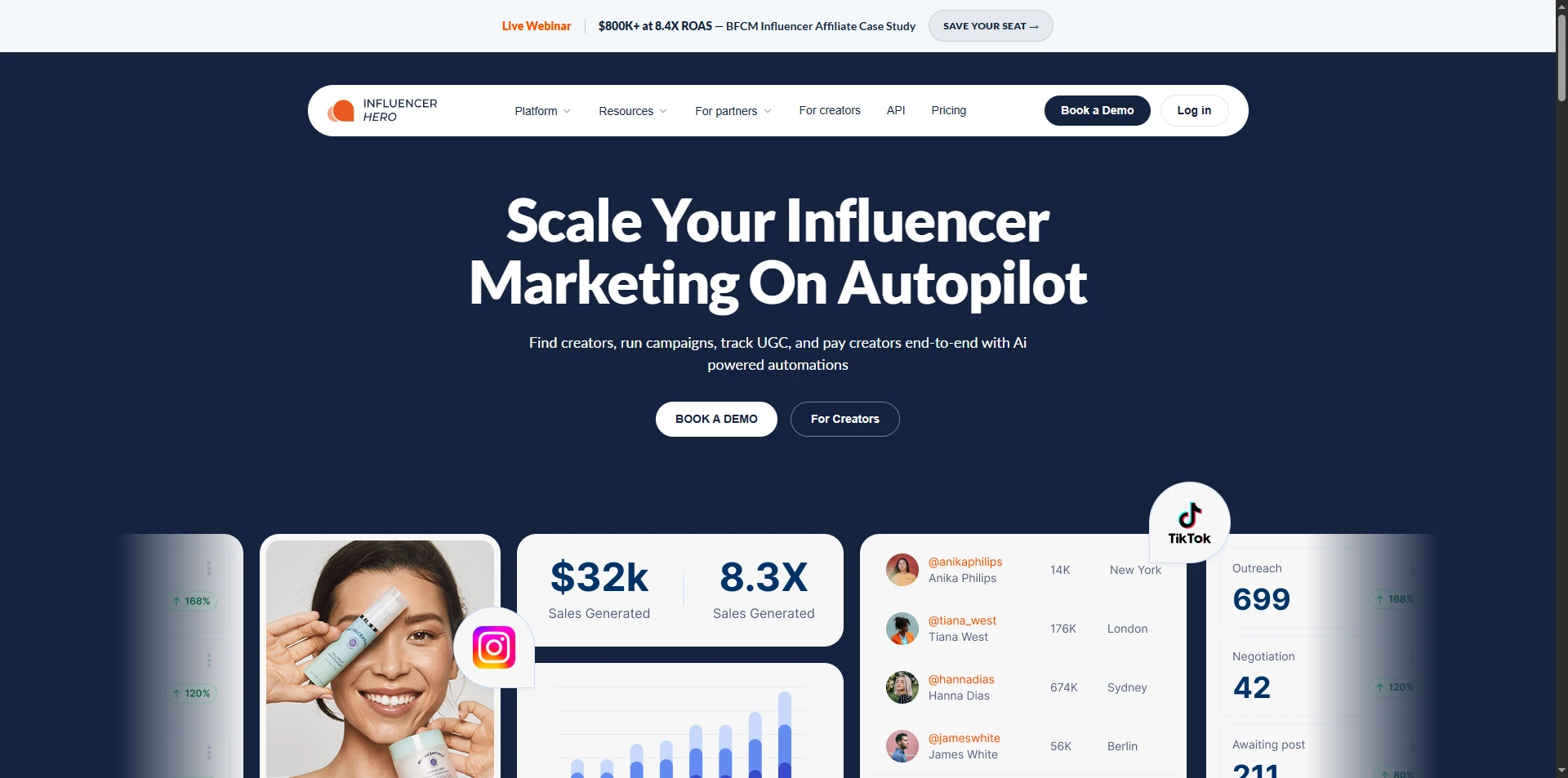
Influencer Hero publishes brand plans from $649/mo Standard on a 3 month minimum, with strong outreach automation and content tracking including Stories. More expensive than Insense Brand, with no marketplace fee on top.
6. Heepsy
Best for: small teams that want a cheap way to search rather than commission content.
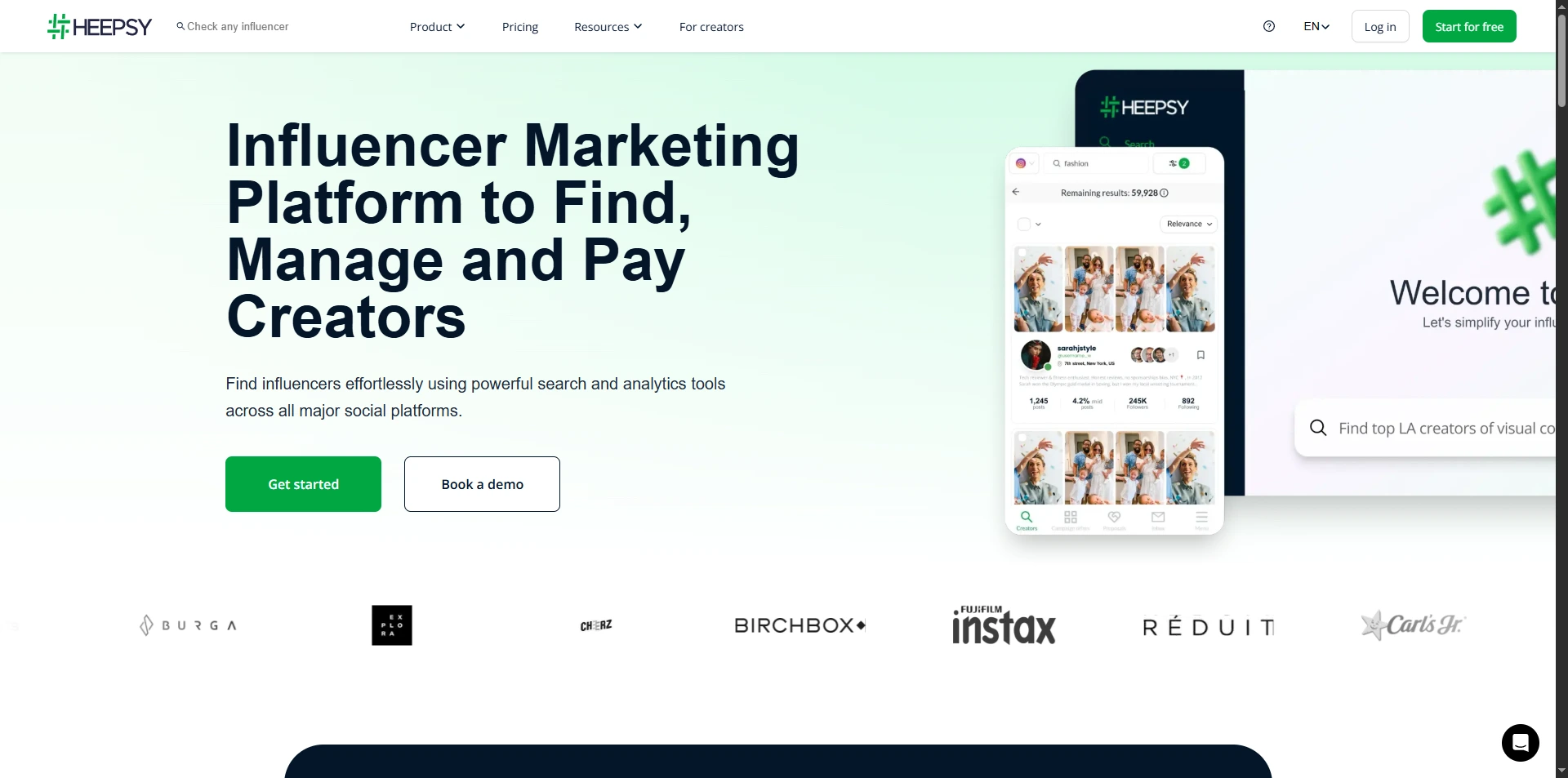
Heepsy has a free plan and a reported $69/mo Starter tier. Note the same pattern to check for: reviews report a 12% fee on creator payments processed through the platform, alongside an index reported at 11M+ profiles and a 3,000 follower floor.
7. IQFluence
Best for: teams that want a large searchable index with optional outreach.
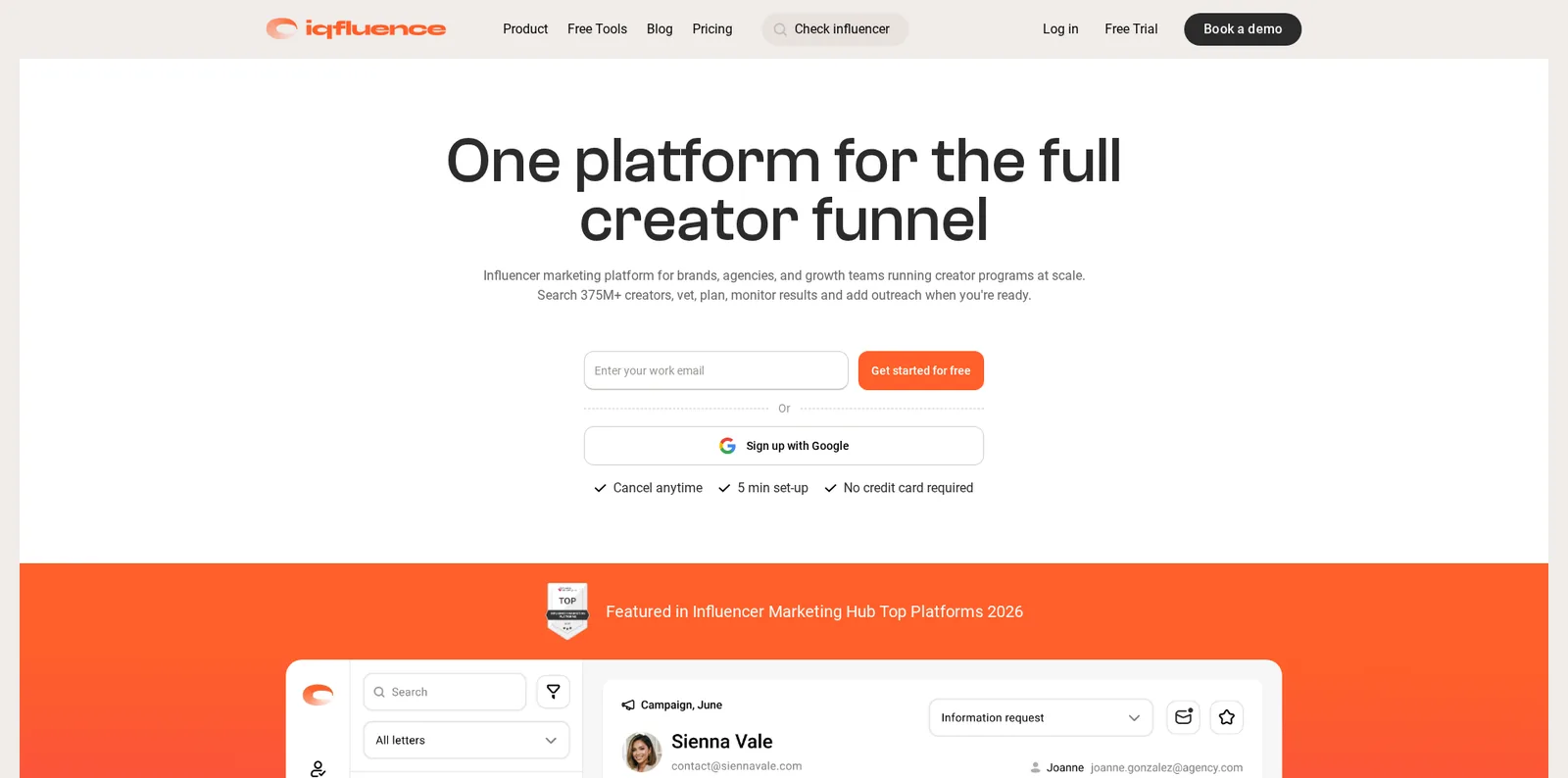
IQFluence claims 375M+ creators across Instagram, TikTok and YouTube, with published plans from $236/mo billed annually and a genuinely free 7 day trial. A discovery tool rather than a content pipeline, with no fee on creator spend.
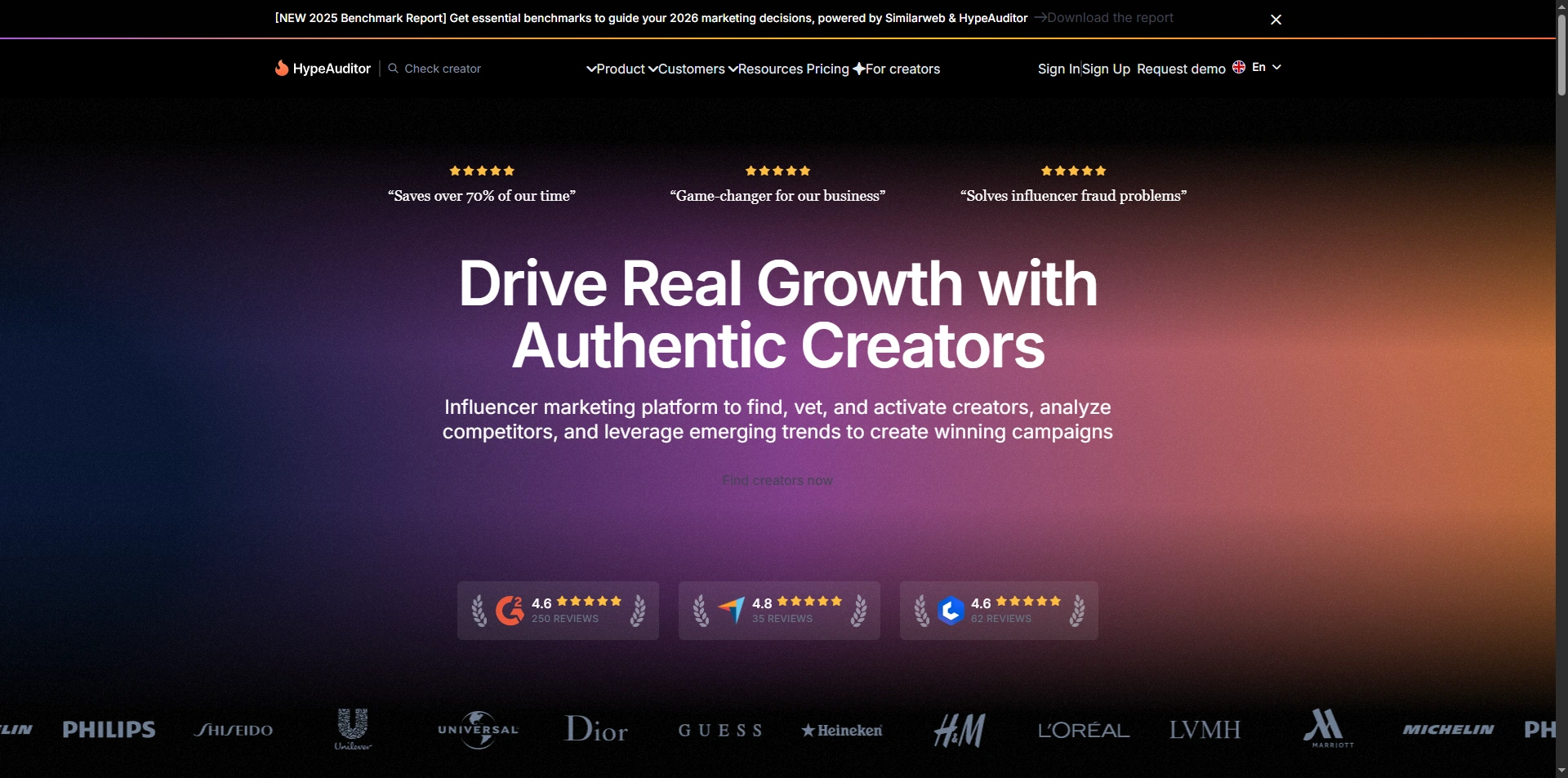
8. HypeAuditor
Best for: teams that want to verify audience quality before commissioning anything.
HypeAuditor's Basic plan is $299/mo billed annually, with 227.3M+ accounts and coverage of X and Twitch. Its own documentation notes Basic ships without AI Search and the Account Quality Score filter.
9. Aspire
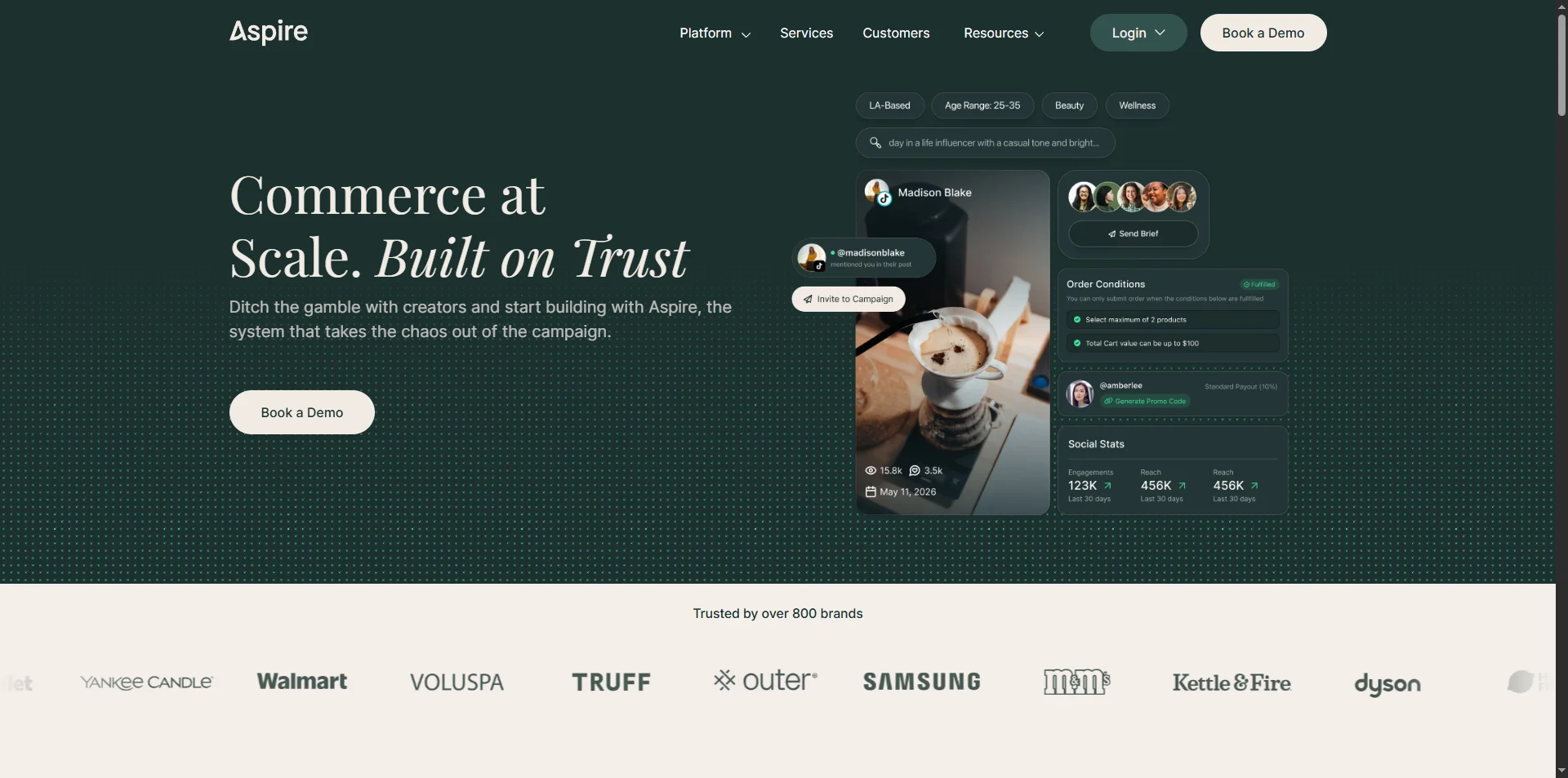
Best for: brands running UGC licensing and affiliate at genuine scale.
Aspire has reported pricing around $2,299 to $2,499/mo on annual terms. It is the enterprise version of what Insense does, with deeper content licensing, and priced accordingly.
10. Upfluence
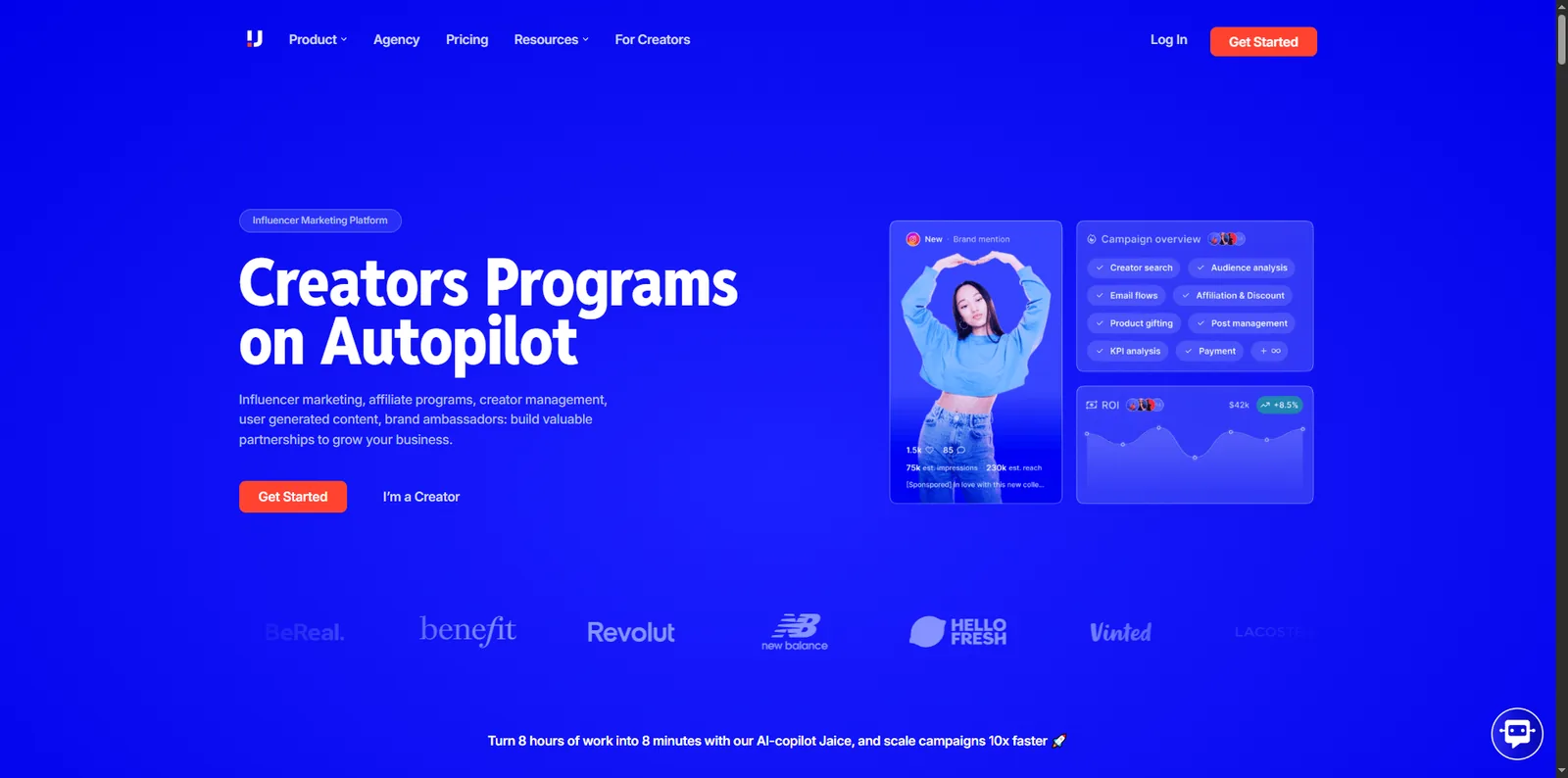
Best for: larger teams folding creator content into a wider ecommerce stack.
Upfluence is quote-only, with G2 reporting a $478/mo floor and buyers reporting quotes of $1,400 to $1,800/mo on annual contracts. Broader than Insense, and a longer commitment.
Full pricing comparison
| Tool | Starting price | Fee on creator spend | Best for |
|---|---|---|---|
| Leewou | $149/mo ($99/mo yearly), free trial | None, payments not handled | Discovery and vetting across the public index |
| Insense | $650 first month, then $400/mo yearly | 7-20% by plan | UGC production and creator ads |
| Collabstr | Free tier, paid ~$99/mo (reported) | 5% published, 10% reported on free tier | Fast booking of listed creators |
| Modash | $299/mo ($399/mo month-to-month) | None on the subscription | Shopify brands wanting payments bundled |
| GRIN | $0 free, paid from $200/mo | None on the subscription | Ecommerce seeding with a free tier |
| Influencer Hero | $649/mo Standard | None on the subscription | Outreach and seeding at volume |
| Heepsy | $69/mo Starter (reported), free plan | 12% reported on payments processed | Cheapest database entry point |
| IQFluence | $236/mo Starter billed annually | None on the subscription | Large index with optional outreach |
| HypeAuditor | $299/mo billed annually | None on the subscription | Audience audits, plus X and Twitch |
| Aspire | $2,299-$2,499/mo (reported) | None on the subscription | UGC licensing and affiliate at scale |
| Upfluence | $478/mo reported floor, $1,400-$1,800/mo quoted | None on the subscription | Larger teams on a wider ecommerce stack |
Content production and creator research are different purchases
The reason Insense charges a percentage is that it is doing more than showing you data. It is brokering work, holding payment, and moving finished content into ad accounts. That is a service business, and service businesses take a cut.
The reason a research tool charges a flat fee is that it is not touching the money. You find creators, you decide, you pay them yourself.
Neither model is better in the abstract. What matters is which one matches where your time actually goes. If you already know who you want and need content made, pay for the pipeline. If you keep working with creators who turn out to have the wrong audience, no amount of content production fixes that.
Plenty of teams run both, using a UGC platform for ad creative and a database for the partnerships worth vetting properly. If that is you, ask about a plan scoped to just the parts you would use, which normally prices below the published Essential tier. While we're this size you also get a direct line to the team rather than a ticket queue.
See the receipts yourself
- Insense's own pricing page, the source for the $650 Trial month, the $500 and $400 Brand figures, and the 20%, 10% and 7% marketplace fees
- Insense feels dead, r/UGCcreators, a creator on campaign response times
- Insense discussion, r/UGCcreators, a creator on deal sizes and slow brand payment
- Insense reviews on G2, verified reviews and the pros and cons breakdown
FAQ
Insense alternatives: common questions
A free trial, a flat price, and no cut of your creator budget
430M+ creators across Instagram, TikTok and YouTube. 14 days free, no credit card.